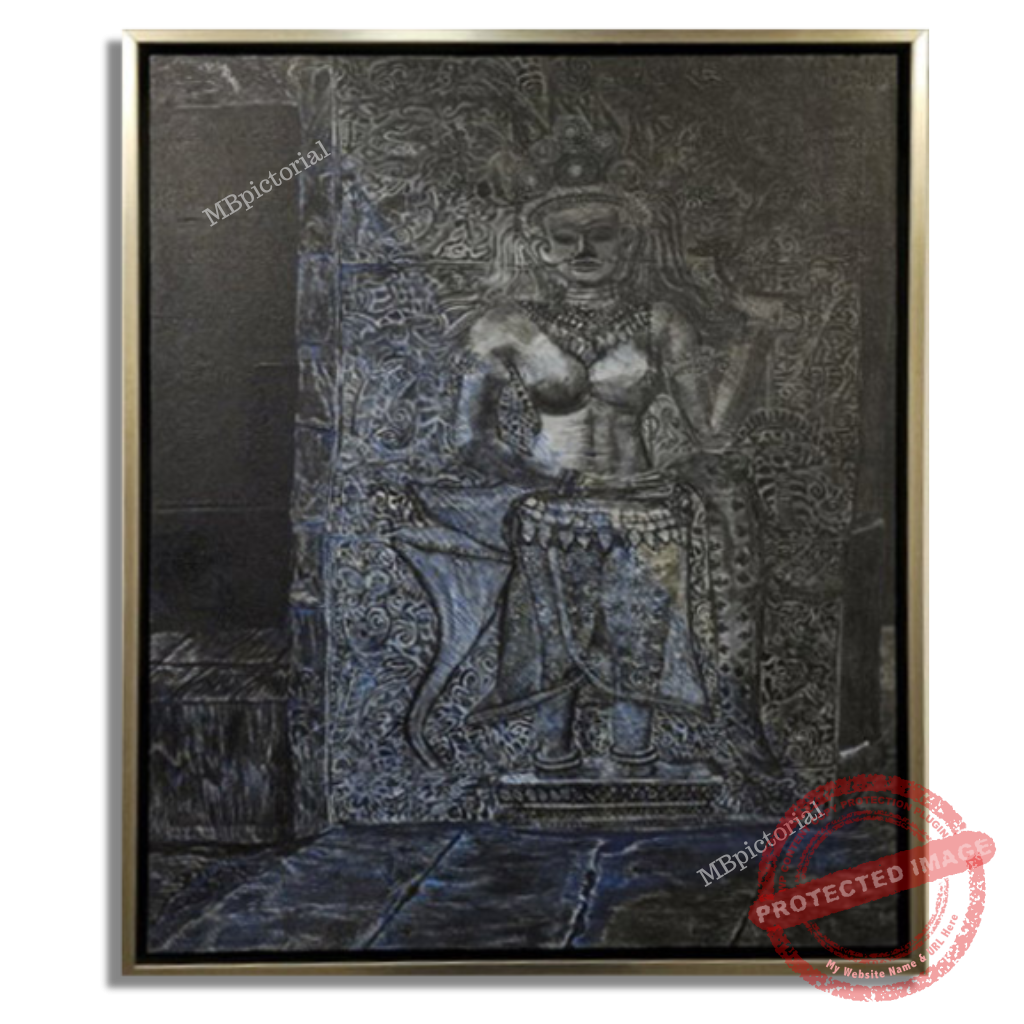
This painting celebrates the multifaceted roles of women in South Asian societies, from the practical, business-savvy spirit of modern-day shopkeepers in Angkor to the mystical grace of the Apsara. The artwork explores the distinction between these two groups of women: the everyday women and the divine spirits. The Apsara are not mere seductresses but are revered as celestial beings of water and clouds in both Hindu and Buddhist traditions, depicted in Angkor’s carvings as dancers. The standing, front-facing figures, known as Devatas, are depicted as mystically divine and knowledgeable.

The piece highlights the spiritual significance of the Apsara, who are considered life-givers akin to the rain, believed to be instrumental in the flourishing of civilizations like Angkor. The painting also touches on the etymological connection of Apsara to the Sanskrit term Vidhyadharis (knowledge bearers), recognizing them as fascinating and profound beings of unknown origin who hold a deep spiritual connection to life itself.

Dimension
18.4"(W) x 24"(H)
Medium
Acrylic on Canvas
Year Created
April 2020
Framing
Ready to Hang

Cultural Details

In South Asian cultures, women have historically held significant roles that are often both practical and spiritual. The Apsara are a prime example, serving not only as artistic motifs but as powerful symbols of life and knowledge. Their association with water and clouds links them directly to the life-giving force of the monsoon rains, which were vital for the agricultural success and survival of the Khmer civilization. The distinction between Apsara and Devata in Angkor’s carvings is spiritually significant. While Apsara are celestial dancers who entertain gods, the Devata are revered as goddess figures who embody knowledge and divine protection. The name Bidadari, used in Malay and Indonesian, reinforces their role as Vidhyadharis, or knowledge bearers. This artwork underscores the idea that the success and flourishing of the Khmer Empire were not merely due to the power of kings and gods but were also intricately tied to the spiritual, intellectual, and life-giving contributions of these female figures.
Artist's Personal Note

“During my travels through Angkor, I was struck by the incredible presence of women, both in the ancient carvings and in the modern-day markets. I saw the vibrant spirit of the women running the shops and felt a deep connection to the ancient spirits carved in stone. The idea of the Apsara as divine beings of water and knowledge, rather than just dancers, resonated with me. I wanted to capture that spiritual essence in this painting.

I believe this artwork shows the duality of womanhood—the practical, grounded strength of the working woman and the mystical, divine power of the Apsara. It’s a tribute to the unseen forces and quiet wisdom that have always guided these societies. The painting is an ode to the women who build, nurture, and inspire, from the earth to the heavens.”

Handcrafted Original
Authenticity Certificate
Spiritual Energy
Water Element

Care Instructions

  • Display away from direct sunlight to preserve colors
  • Clean gently with soft, dry cloth
  • Maintain stable humidity levels (45-55%)
  • Professional framing recommended for long-term preservation

You Might Also Like-

Green tara1
Green Tara
Abu sumbel 1
Abu Simbel
gate of masada
Gate of Masada
Padua at 1
Padua AT
Night at venice 1
Night at Venice

We use cookies to personalize your experience. By using our website you agree to our terms and conditions and Privacy Policy.